
Replacing a water heater: planning your choice
Bedroom count helps orient a budget, but actual hot-water use matters.
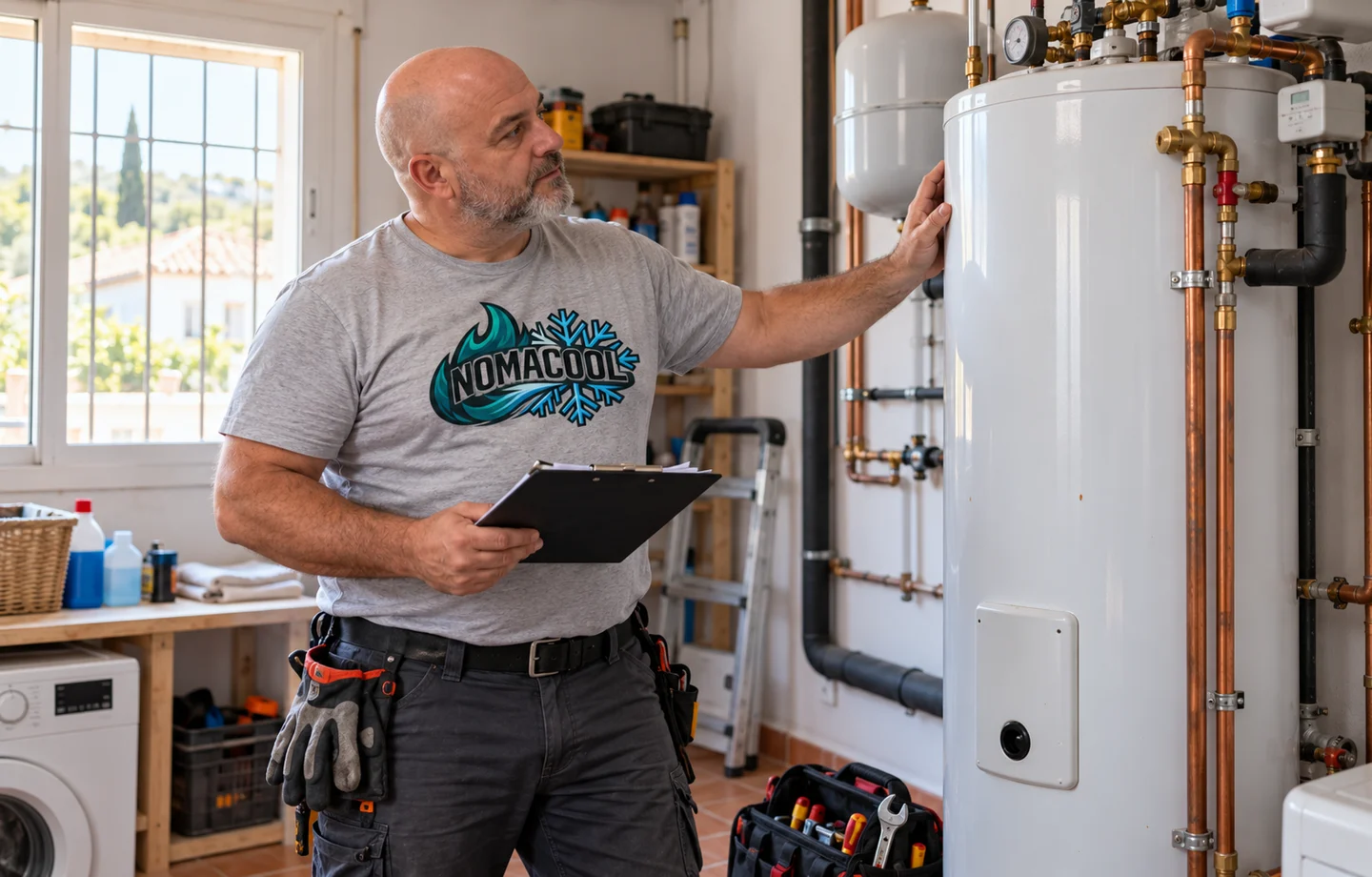
Describe your daily needs
Explain usual occupancy, seasonal use and back-to-back demand. Mention baths, consecutive showers and planned changes. Ask the professional to explain the proposed capacity and configuration.
Gather the property constraints
Photograph the existing unit and model label without dismantling it. Measure accessible space and describe routes. An electric, heat-pump or gas solution is not chosen solely by unit price: the quote should state any necessary adaptations.
- Location and access for removing the old unit
- Existing connections to check on site
- Noise, space and maintenance access
Plan replacement and aftercare
Ask whether removal, disposal, connections and commissioning are included. Clarify the expected time without hot water and the instructions provided afterward. Electrical, gas and plumbing work belongs with competent professionals.
Domestic hot water: capacity, comfort and consumption
The best choice depends on occupants, usage, available space and electrical capacity (or gas). Correct sizing prevents lukewarm water and overspending.
What we install: heat pump, DHW and distribution
For residential projects, the most common setup is an air-to-water heat pump for heating and domestic hot water (DHW). The right configuration depends on the property: apartment, house, multi-zone layout, and usage patterns.
We design for real-life use: correctly sized DHW tank, enough hot water for consecutive showers, DHW priority when relevant, and distribution compatible with low-temperature radiators, fan-coils or underfloor heating. Installations are planned to reduce building work, noise and overly long pipe runs.
- Air-to-water (aerothermal) for heating + DHW
- DHW tank sized to occupancy
- Emitters: low-temp radiators, fan-coils, underfloor
- Controls: thermostats, zones, heating curve
- Clean finishing and service access
Maintenance: prevent breakdowns and keep performance
In hot, dusty areas, filters clog quickly: a common cause of odors, higher bills and lower performance. Regular maintenance extends lifespan and reduces summer breakdowns.
Describe a typical day at home
The number of occupants is a starting point. Also describe shower times, consecutive uses, periods away and planned household changes. A holiday home used for a few weeks a year operates differently from a permanent residence. These details help the professional discuss suitable capacity and recovery time.
Photograph the existing appliance label without dismantling anything. Note its location, approximate age if known, and the problem you want to solve: comfort, space, consumption or replacement of a faulty unit.
Check the constraints before choosing a model
The space required includes more than the tank dimensions. Allow for installation access, connections, maintenance clearances and future removal. The professional must check the support, available supply and drainage required by the proposed solution. Gas and heat pump water heaters also require an on-site review of their ventilation, airflow and discharge requirements.
Avoid ordering a model just because it looks like the old one. A product sheet and a photograph cannot replace a compatibility check of the installation.
Clarify the work and commissioning
The quote should distinguish the appliance, removal of the old unit, adaptations, installation, commissioning and disposal of replaced materials. Ask which settings will be explained, which documents you will receive and how to request follow-up. Keep model details and warranty terms with the invoice. Connection work and safety checks are the professional’s responsibility.