
Heat pumps in a renovation: questions to ask
Before replacing your heating, explain what you have and what you want. The project involves the whole home.
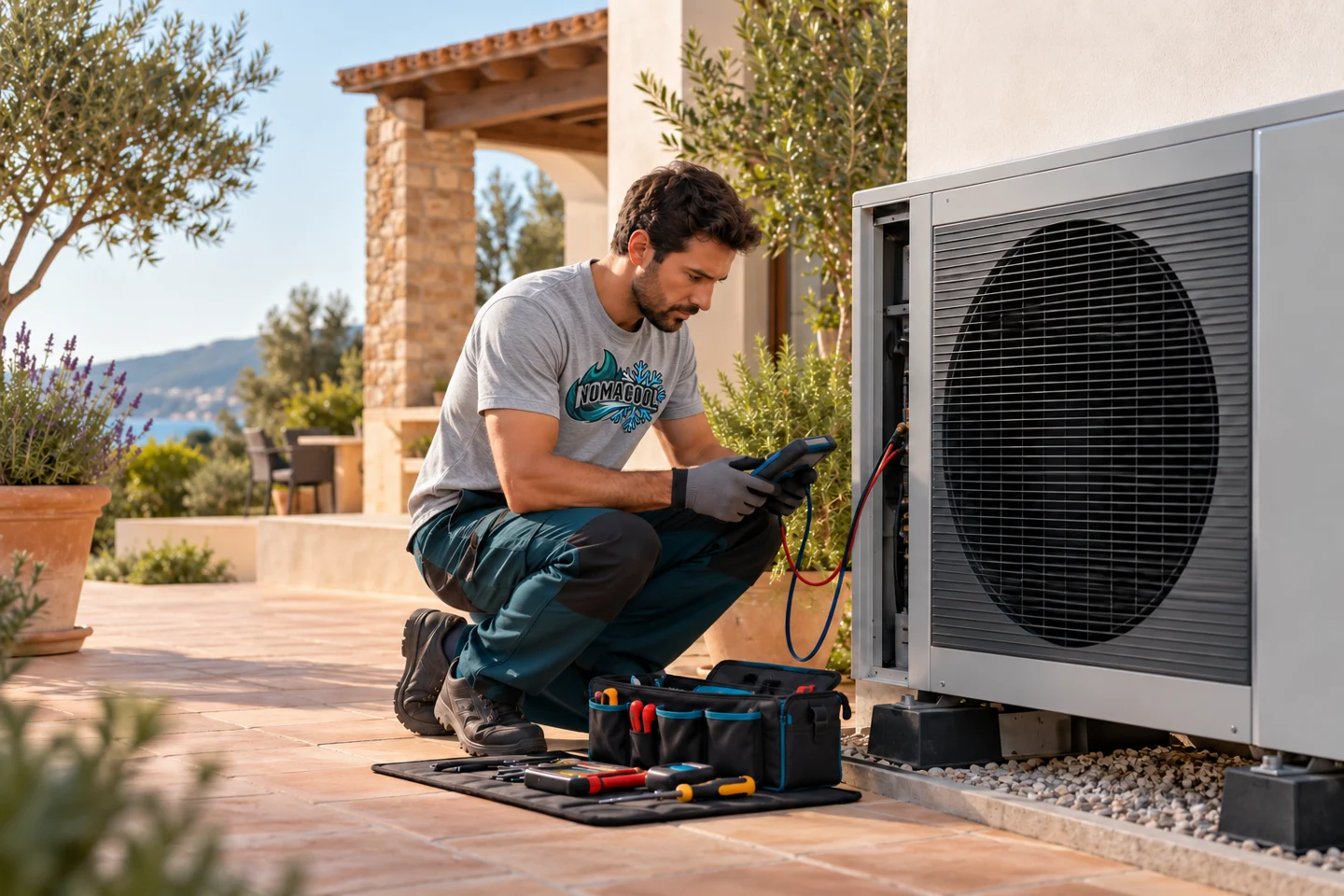
Describe the existing installation
List the heating system, room emitters and hot-water use. Gather visible model references and energy bills if available. Floor area alone does not determine the required power: a technician needs to assess the building and configuration.
- Radiators, underfloor heating or other emitters
- Separate or integrated hot-water production
- Hard-to-heat rooms and occupancy patterns
Clarify what will stay
Ask which components remain, which are replaced and what adaptations are proposed. Discuss locations, connections and future maintenance access. Mention planned insulation work before choosing equipment.
Compare a complete solution
The quote should explain equipment, any storage tanks, accessories, installation and associated work. Ask for the conditions behind estimated savings. A savings claim without clear assumptions is not enough to compare two options.
- What exactly does commissioning include?
- Who provides aftercare and under what warranty?
- Which documents and settings are handed over?
What we install: heat pump, DHW and distribution
For residential projects, the most common setup is an air-to-water heat pump for heating and domestic hot water (DHW). The right configuration depends on the property: apartment, house, multi-zone layout, and usage patterns.
We design for real-life use: correctly sized DHW tank, enough hot water for consecutive showers, DHW priority when relevant, and distribution compatible with low-temperature radiators, fan-coils or underfloor heating. Installations are planned to reduce building work, noise and overly long pipe runs.
- Air-to-water (aerothermal) for heating + DHW
- DHW tank sized to occupancy
- Emitters: low-temp radiators, fan-coils, underfloor
- Controls: thermostats, zones, heating curve
- Clean finishing and service access
Sizing: capacity, SCOP and noise (what truly matters)
Sizing is based on real heat demand. Oversizing can increase cycling (start/stop), reduce efficiency and shorten lifespan; undersizing can struggle during cooler days or high DHW demand. A technical visit is valuable when the case is non-standard.
Beyond nominal capacity, we review seasonal efficiency, required supply temperatures and sound levels. In communities and inner patios, placement and vibration control matter as much as the unit itself. The location is chosen to reduce nuisance and meet building constraints.
- Heat load from m² + insulation + orientation
- Required supply temperature (LT vs HT)
- Seasonal performance (SCOP/SEER)
- Outdoor placement: vibration, noise, access
- Avoid long runs and thermal losses
Using existing radiators and recommended upgrades
A common question is: “Can I keep my radiators?”. Sometimes yes, but it depends on radiator output and required supply temperature. If you need very high water temperatures, efficiency drops. We assess radiators, insulation and usage to choose the right approach.
If efficiency is the goal, low temperature operation is best: suitable radiators, fan-coils or underfloor heating. Simple building improvements window sealing, drafts reduction, zoning often deliver noticeable gains.
- Assess existing radiators (size/output)
- Low temperature operation improves seasonal efficiency
- Zoning: heat what you use
- Simple insulation improvements matter
Apartment buildings: inner patios, façades and community rules
Many Valencia buildings have inner patios and façade restrictions. For a heat pump, the outdoor unit must be feasible: correct mounting, drainage, ventilation and neighbor distance for noise. Depending on the case, rooftop placement may be preferable; in others, a patio or balcony works.
Our approach is pragmatic: validate constraints quickly, propose a reasonable placement, and execute a clean installation (brackets, anti-vibration pads, tidy trunking). The goal is a discreet and durable result without future conflicts.
- Validate allowed outdoor placement
- Brackets and anti-vibration solutions
- Clean routing and service access
- Noise control and distances