
Compare installation quotes beyond the total
A lower price may cover different work. Compare the actual scope before deciding.
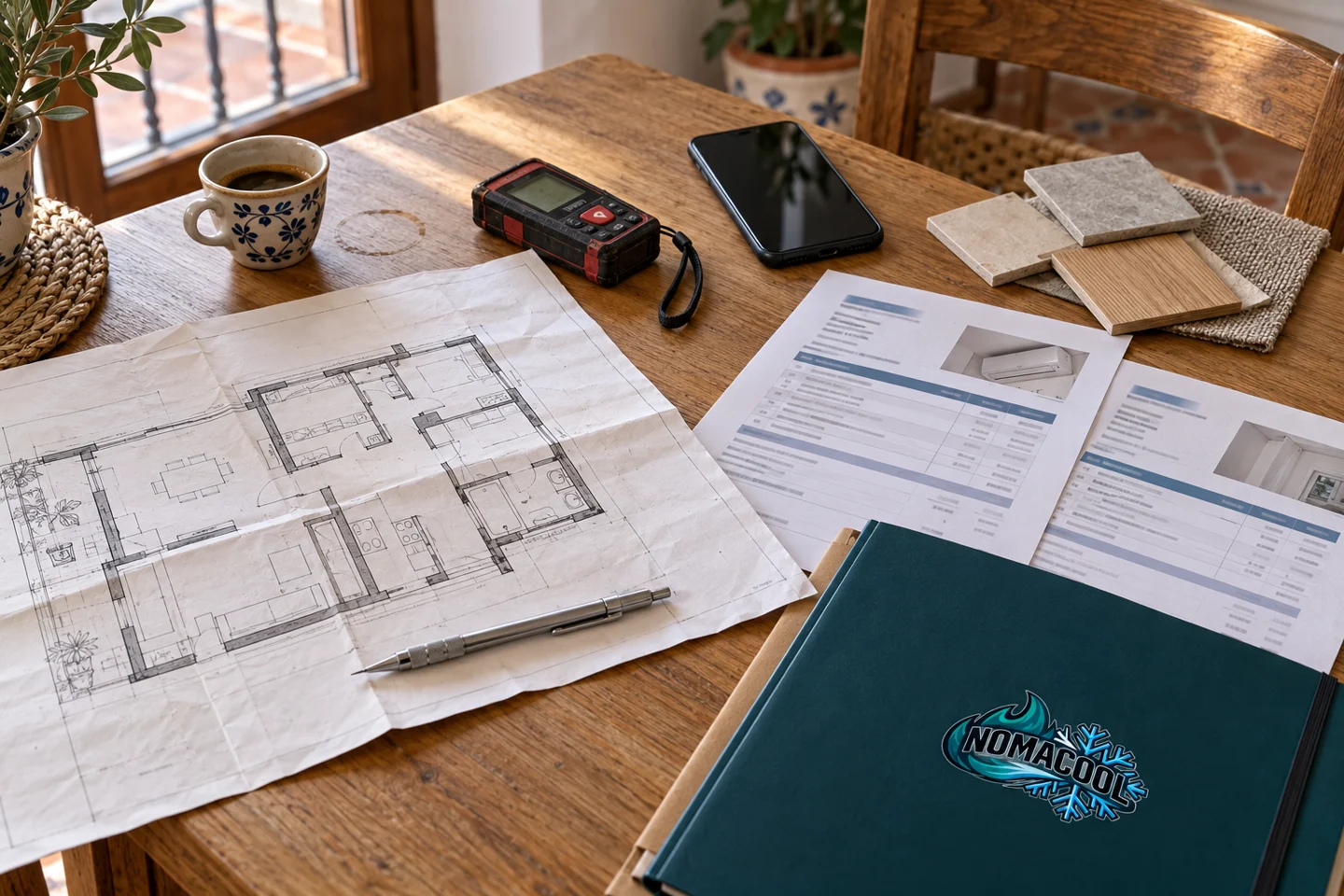
Match the scope first
Check that both proposals cover the same rooms and objective. A living-room installation is not directly comparable with a solution for several bedrooms. Ask for specific equipment references, quantities and accessories.
Separate equipment and installation
Look for clear lines for equipment, labour, connections, brackets, drainage and finishing. Record exclusions and any amounts that still depend on further checks.
Review prices and terms
Identify net amounts, tax rates and the total payable. Ask for payment stages, validity, estimated timing and the terms for changing the project. Do not assume a tax treatment or subsidy applies to you without checking.
Keep a comparison checklist
Mark each item as included, excluded or to be confirmed. Ask both providers the same questions before treating their offers as equivalent.
- Equipment and exact references
- Installation, removal and finishes
- Commissioning and supplied documentation
- Stated warranty and aftercare contact
Move from estimate to quote
An online simulation helps plan your budget. Accepting a quote is a separate step: read the scope and clarify unresolved points before making a commitment.
Air conditioning installation cost in Valencia
Costs depend on system type, capacity and installation complexity. In typical Valencia buildings, pricing differences usually come from access, pipe length and where the outdoor unit can be placed (balcony, inner patio, rooftop or an allowed area).
That’s why we use an estimator: in a few steps you get a realistic range. If needed, we refine after technical validation. It’s the fastest way to decide, compare options and plan your investment without wasting time.
- 1-room split: depends on access and routing
- 2–3 room multi-split: depends on configuration
- Drainage: may require a specific solution
- Façade/patio: impacts brackets and trunking
Sizing: capacity, SCOP and noise (what truly matters)
Sizing is based on real heat demand. Oversizing can increase cycling (start/stop), reduce efficiency and shorten lifespan; undersizing can struggle during cooler days or high DHW demand. A technical visit is valuable when the case is non-standard.
Beyond nominal capacity, we review seasonal efficiency, required supply temperatures and sound levels. In communities and inner patios, placement and vibration control matter as much as the unit itself. The location is chosen to reduce nuisance and meet building constraints.
- Heat load from m² + insulation + orientation
- Required supply temperature (LT vs HT)
- Seasonal performance (SCOP/SEER)
- Outdoor placement: vibration, noise, access
- Avoid long runs and thermal losses
Using existing radiators and recommended upgrades
A common question is: “Can I keep my radiators?”. Sometimes yes, but it depends on radiator output and required supply temperature. If you need very high water temperatures, efficiency drops. We assess radiators, insulation and usage to choose the right approach.
If efficiency is the goal, low temperature operation is best: suitable radiators, fan-coils or underfloor heating. Simple building improvements window sealing, drafts reduction, zoning often deliver noticeable gains.
- Assess existing radiators (size/output)
- Low temperature operation improves seasonal efficiency
- Zoning: heat what you use
- Simple insulation improvements matter